
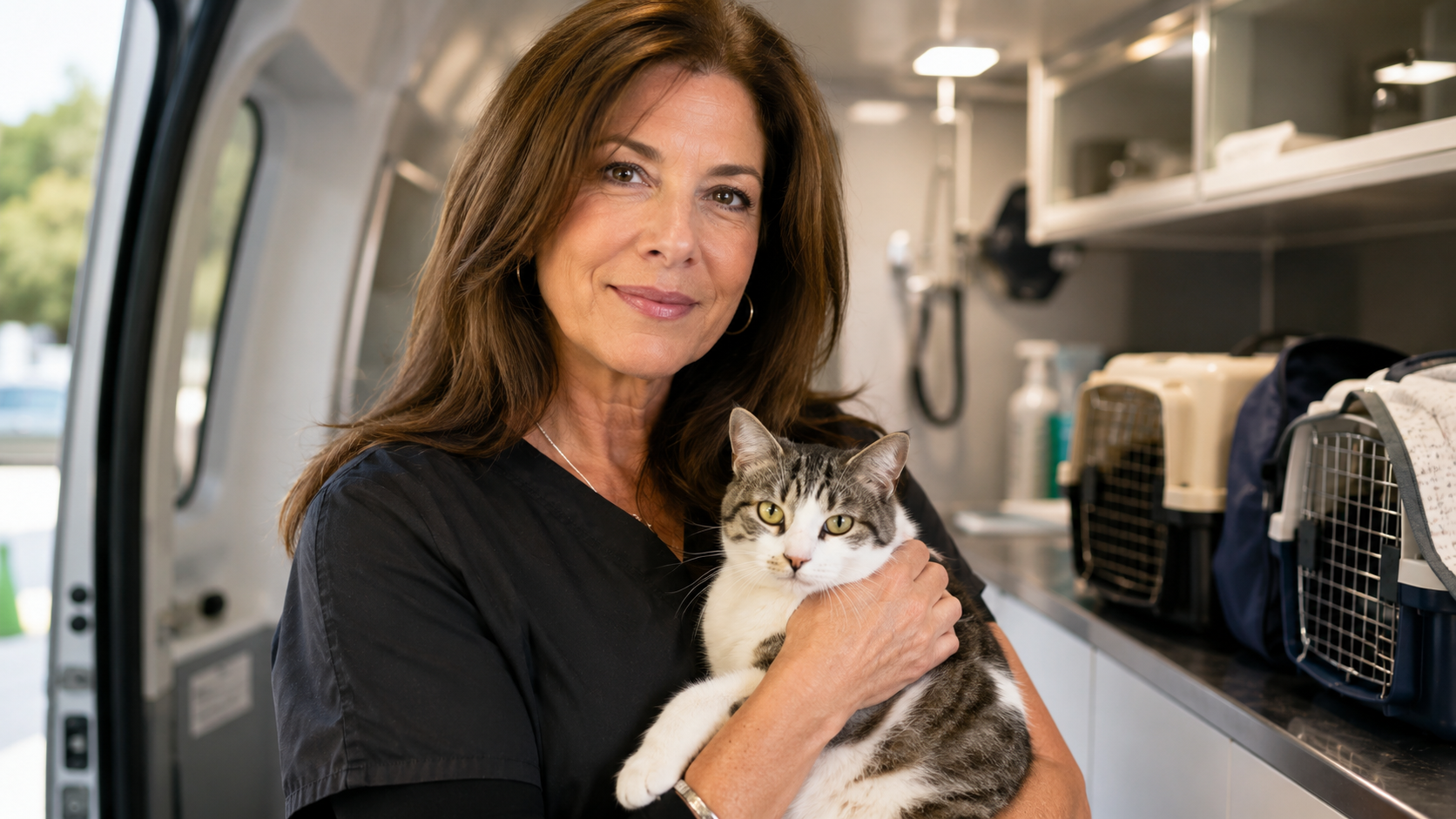
Donna Sicuranza is best known for her long-standing leadership in Connecticut’s animal welfare sector. Public records identify her as Donna Sicuranza Marconi, the Executive Director of Tait’s Every Animal Matters, commonly known as TEAM.
Her public work focuses primarily on making feline spay, neuter, and vaccination services more accessible. Rather than relying on unverified claims about her personal life, this guide examines her confirmed professional role, organizational work, public advocacy, and contribution to animal welfare.
Donna Sicuranza Quick Facts
| Detail | Verified Information |
|---|---|
| Full public name | Donna Sicuranza Marconi |
| Professional role | Executive Director |
| Organization | Tait’s Every Animal Matters |
| Common organization name | TEAM |
| Primary field | Animal welfare and nonprofit leadership |
| Main program | Mobile feline spay, neuter, and vaccination clinic |
| Area served | Connecticut |
| Program launch | March 1, 1997 |
| Reported organizational impact | More than 225,000 cats served since 1997 |
TEAM’s official staff page lists Donna Sicuranza Marconi as its Executive Director. The organization also reports that its veterinary teams have sterilized and vaccinated more than 225,000 domestic and feral cats since the mobile program began.
Who Is Donna Sicuranza?
Donna Sicuranza is a nonprofit executive associated with the development and operation of affordable animal healthcare programs in Connecticut.
Her name is closely connected with TEAM, a charitable organization that operates a mobile clinic for cats. The service travels to communities across Connecticut, providing sterilization, vaccination, and related care for domestic and feral cats.
Unlike a celebrity or entertainment figure, Sicuranza’s public profile is based on community service. Most reliable information about her concerns her professional responsibilities rather than her age, family, finances, or private relationships.
Step 1: Understand Donna Sicuranza’s Public Identity
The first step in understanding Donna Sicuranza is identifying the correct person.
Multiple people may share the same name, and online articles sometimes combine information belonging to unrelated individuals. The Donna Sicuranza connected with Connecticut animal welfare is publicly identified by TEAM as Donna Sicuranza Marconi.
She should not be confused with Donna Marie Sicuranza, a New York resident whose obituary records state that she died in 2017 after a career in banking. That is a separate individual.
Why Identity Verification Matters
Poorly researched biography pages often copy information from one another without confirming the original source. This can lead to incorrect claims about:
- Age and birth date
- Marriage and children
- Education
- Career history
- Net worth
- Celebrity relationships
A reliable Donna Sicuranza profile should begin with information published by TEAM or documented in official public records.
Step 2: Explore Her Leadership at TEAM
Donna Sicuranza serves as Executive Director of Tait’s Every Animal Matters. In this position, she is associated with the organization’s administration, public mission, community outreach, and long-term animal welfare programs.
TEAM states that many members of its staff have remained with the program for more than 25 years. Its current staff page presents Sicuranza alongside administrative and veterinary professionals who support the mobile clinic’s daily operations.
What Does an Executive Director Do?
Although TEAM does not publish a complete job description for Sicuranza, an executive director of a nonprofit organization commonly helps oversee:
- Organizational strategy
- Program administration
- Community partnerships
- Fundraising and donor communication
- Staff coordination
- Public education
- Regulatory compliance
- Advocacy related to the organization’s mission
These responsibilities require both operational knowledge and a clear understanding of the community being served.
Step 3: Learn About the TEAM Mobile Clinic
Donna Sicuranza’s most significant publicly documented work is connected with the TEAM Mobile Feline Spay/Neuter Clinic.
According to the organization’s history, plans for the mobile clinic began in 1996 under the direction of veterinarian John A. Caltabiano and Executive Director Donna Sicuranza. The clinic officially began operating on March 1, 1997.
Ten cats were sterilized and vaccinated on its first day. Within six months, the program had reportedly served approximately 5,000 cats, reaching around 8,000 procedures by its first anniversary.
Why a Mobile Clinic Was Needed
Before affordable mobile services became available, some Connecticut cat owners and community caretakers had limited access to sterilization programs.
Cost, transportation, location, and availability could prevent people from obtaining veterinary care. These barriers contributed to unwanted litters, crowded shelters, abandoned cats, and growing feral cat populations.
The mobile model helped address these difficulties by bringing services closer to local communities.
Step 4: Understand the Mission Behind Her Work
The purpose of TEAM’s mobile program is not simply to perform individual veterinary procedures. Its broader mission is to reduce feline overpopulation before unwanted kittens are born.
Spaying and neutering can support this goal by preventing uncontrolled reproduction. Vaccination services can also improve the health of individual cats and reduce the spread of certain preventable diseases.
TEAM welcomes both domestic and feral cats aboard its mobile clinic and travels regularly to communities throughout Connecticut.
Domestic and Feral Cat Services
Domestic cats are generally socialized animals living with owners or caretakers. Feral cats often live outdoors and may have little direct contact with humans.
Programs serving feral populations commonly work with community members involved in trap-neuter-return activities. Under this approach, cats are humanely trapped, sterilized, vaccinated, and returned to their established outdoor location when appropriate.
By serving both groups, TEAM addresses pet ownership needs as well as community-level population control.
Step 5: Measure Donna Sicuranza’s Organizational Impact
The most measurable impact connected with Donna Sicuranza comes from TEAM’s service totals.
The organization’s current website reports more than 225,000 cats sterilized and vaccinated since 1997. It also describes the clinic as a statewide service that accepts domestic and feral cats.
An earlier organizational history reported more than 206,000 cats served by 2021. This progression shows that the program continued operating and adding to its total after reaching the 200,000-cat milestone in 2019.
Impact Beyond Procedure Numbers
The value of a program like TEAM can extend beyond the number of surgeries completed.
Potential community benefits include:
- Fewer unwanted litters
- Lower pressure on animal shelters
- Greater access to preventive veterinary care
- Reduced abandonment of cats and kittens
- Support for people managing feral colonies
- Improved public awareness of responsible pet care
- More affordable services for households with limited incomes
These outcomes explain why long-term nonprofit leadership is important to the program’s success.
Step 6: Examine Her Role in Public Advocacy
Donna Sicuranza has also appeared in Connecticut government records as an animal welfare representative.
In a 2002 legislative hearing, she introduced herself as the Executive Director of Tait’s Every Animal Matters. In 2007, she testified as TEAM’s Executive Director and a member of an advisory committee considering animal welfare recommendations.
These appearances show that her work has included more than managing clinic operations. It has also involved communicating with lawmakers and participating in public discussions affecting animals and nonprofit service providers.
Why Legislative Testimony Matters
Animal welfare organizations can provide lawmakers with practical information from professionals working directly in the field.
Their testimony may help explain:
- How proposed laws affect veterinary programs
- Challenges faced by animal shelters and rescue groups
- The realities of feline overpopulation
- Financial barriers experienced by pet owners
- Operational needs of mobile clinics
- The likely consequences of new regulations
Sicuranza’s involvement indicates a practical, policy-facing dimension to her leadership.
Step 7: Identify the Leadership Lessons in Her Career
Donna Sicuranza’s public career offers several useful lessons for nonprofit leaders.
Focus on a Specific Problem
TEAM concentrates on a clearly defined issue: feline overpopulation and access to affordable sterilization services.
A focused mission makes it easier to design programs, measure results, communicate with donors, and maintain public trust.
Make Services Accessible
The mobile clinic model reduces geographic and transportation barriers by taking services to different communities.
This demonstrates how nonprofit organizations can redesign service delivery around the needs of the people and animals they intend to help.
Build for Long-Term Impact
TEAM has operated its mobile program since 1997. Maintaining a specialized service for decades requires consistent administration, trained staff, fundraising, public support, and adaptation.
Long-term impact usually comes from sustained work rather than a single campaign.
Combine Services With Education
Successful animal welfare programs do more than provide treatment. They also explain why sterilization, vaccination, aftercare, and responsible ownership matter.
Education helps communities participate in the solution rather than relying entirely on nonprofit organizations.
Common Misconceptions About Donna Sicuranza
She Is Primarily a Celebrity Figure
Reliable public records connect Donna Sicuranza with nonprofit leadership and animal welfare, not an entertainment career.
Articles describing her mainly through an alleged relationship with a celebrity should be treated cautiously unless they provide dependable primary evidence.
Her Age and Birth Date Are Publicly Confirmed
TEAM’s website does not list her birth date or age. Reliable organizational and government sources reviewed for this profile focus on her career.
Exact personal details should not be presented as fact without a trustworthy citation.
Her Net Worth Is Known
There is no authoritative public source confirming Donna Sicuranza’s personal net worth.
Figures published by biography websites are generally estimates and may be unsupported. A nonprofit executive’s organizational role alone does not provide enough information to calculate personal wealth.
Every Record With Her Name Refers to Her
The name Donna Sicuranza appears in records connected with different individuals.
Writers should compare middle names, professions, locations, organizations, and dates before combining information.
What Makes Donna Sicuranza’s Work Notable?
Donna Sicuranza’s work is notable because it connects nonprofit management with a practical public service.
The TEAM mobile clinic addresses a recurring animal welfare problem through a repeatable model. It travels to communities, performs veterinary procedures, works with domestic and feral cats, and relies on long-term charitable support.
The program’s reported service total also demonstrates the cumulative effect of consistency. Ten procedures on the first operating day eventually grew into more than 225,000 cats served over the life of the program.
How to Research Donna Sicuranza Responsibly
Anyone creating a biography or informational profile should follow a careful research process.
- Start with TEAM’s official website. Confirm her current position and the organization’s mission.
- Review government records. Legislative transcripts can verify her professional title and advocacy.
- Separate namesakes. Do not combine unrelated obituary, banking, or family records.
- Check publication dates. Older service totals may no longer reflect the organization’s latest reported impact.
- Avoid unsupported personal claims. Do not guess her age, marital status, children, or finances.
- Use careful wording. Say that an organization “reports” a number when the figure comes from its own website.
This method produces a more useful article while respecting both accuracy and personal privacy.
Frequently Asked Questions
Who is Donna Sicuranza?
Donna Sicuranza, publicly identified as Donna Sicuranza Marconi, is the Executive Director of Tait’s Every Animal Matters, a Connecticut animal welfare nonprofit.
What is Donna Sicuranza known for?
She is known for her leadership at TEAM and her connection with its mobile feline spay, neuter, and vaccination clinic.
What does TEAM stand for?
TEAM stands for Tait’s Every Animal Matters.
When did the TEAM mobile clinic begin?
The mobile clinic began operating on March 1, 1997, after planning started in 1996.
How many cats has TEAM helped?
TEAM’s official website states that its veterinarians have sterilized and vaccinated more than 225,000 cats since 1997.
Does TEAM only help pet cats?
No. The organization states that both domestic and feral cats are welcome aboard its mobile clinic.
Is Donna Sicuranza’s age publicly available?
A verified birth date or age is not provided on TEAM’s official website or in the reliable professional records reviewed for this article.
What is Donna Sicuranza’s net worth?
Her personal net worth has not been confirmed by a reliable public source. Online estimates should not be treated as verified facts.
Is Donna Sicuranza still associated with TEAM?
TEAM’s current staff page lists Donna Sicuranza Marconi as Executive Director.
Conclusion
Donna Sicuranza is a nonprofit leader whose documented public career centers on animal welfare, accessible veterinary care, and the reduction of feline overpopulation in Connecticut.
Through her executive role at TEAM, she has been connected with a mobile clinic that grew from serving ten cats on its first day to reporting more than 225,000 sterilization and vaccination procedures. The most accurate way to understand Donna Sicuranza is to focus on this verified record of organizational leadership, community service, and long-term animal welfare advocacy.
