
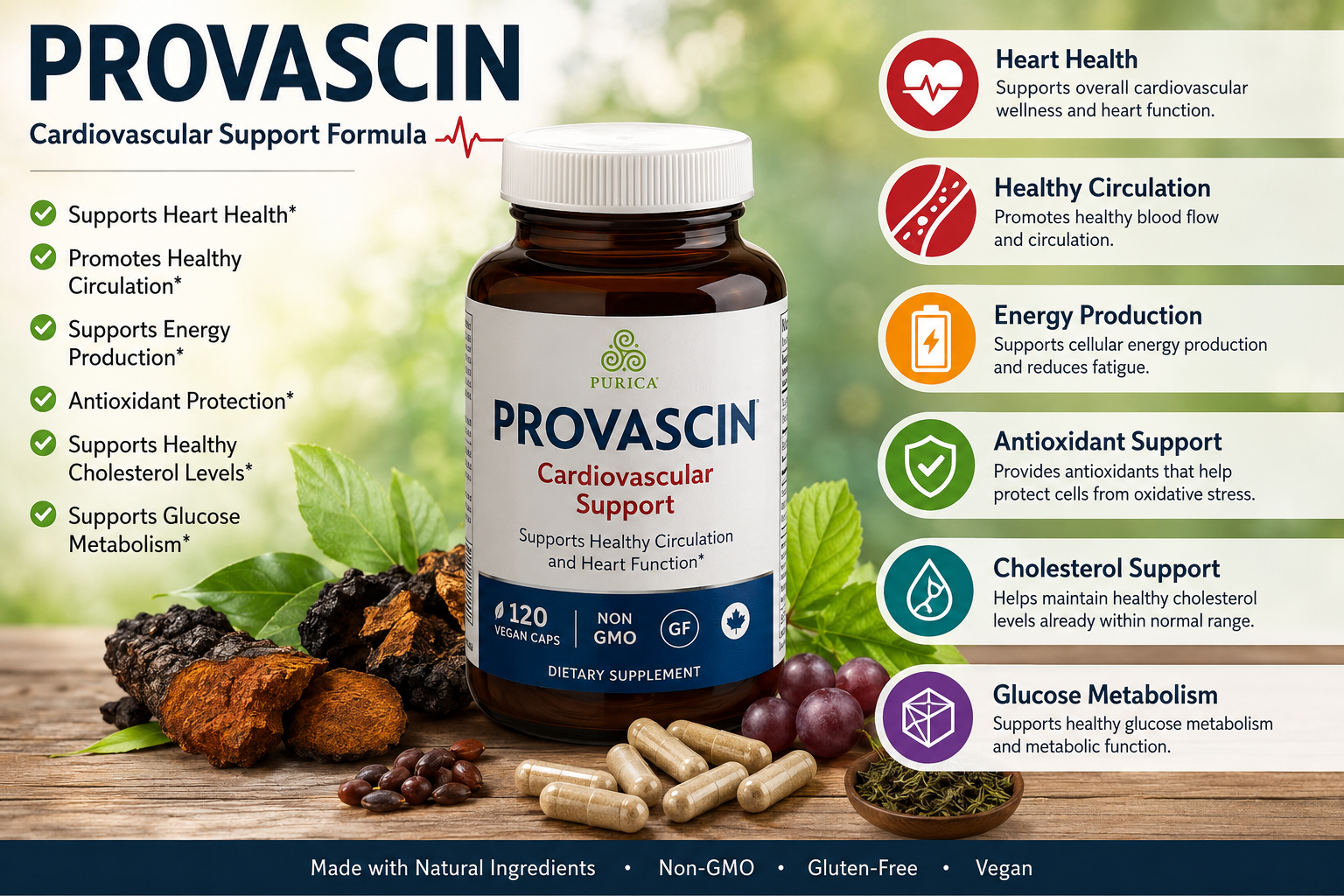
Provascin is commonly associated with a multi-ingredient dietary supplement developed to support cardiovascular health, circulation, energy metabolism, and antioxidant protection. The best-known version is Purica Provascin, a capsule formula containing nutrients and botanical ingredients such as L-carnitine, Coenzyme Q10, Chaga mushroom, alpha-lipoic acid, grape seed extract, and green tea extract.
However, Provascin should not be confused with prescription cardiovascular medicines that have similar names. It is a nutritional supplement rather than a proven treatment for high blood pressure, heart disease, high cholesterol, or chronic venous insufficiency.
This guide explains what Provascin contains, how its ingredients may work, what its limitations are, who should avoid it, and what consumers should check before purchasing it.
What Is Provascin?
Provascin is a cardiovascular-support supplement historically marketed by Purica as a broad-spectrum formula for adults interested in maintaining normal heart, blood-vessel, glucose, cholesterol, and energy-related functions.
The product has primarily been sold in capsule form. Retail listings describe it as a combination of antioxidants, amino-acid derivatives, mushroom material, botanical extracts, and metabolic cofactors.
Available product information indicates that Provascin was promoted for:
- Cardiovascular support
- Antioxidant protection
- Normal energy production
- Healthy glucose metabolism
- Maintenance of normal cholesterol levels
- Circulatory wellness
- Muscle-tissue support
- General endurance
These are largely supportive or marketing-related claims. Provascin is not a substitute for professional diagnosis, prescribed cardiovascular medication, cholesterol treatment, or emergency medical care.
Quick Facts About Provascin
| Feature | Details |
|---|---|
| Product category | Dietary or natural health supplement |
| Best-known manufacturer | Purica |
| Main focus | Cardiovascular and circulatory support |
| Common format | Vegetarian capsules |
| Key ingredients | L-carnitine, alpha-ketoglutarate, Chaga, CoQ10, betaine HCl, alpha-lipoic acid, grape seed and green tea extracts |
| Prescription medicine | No |
| Intended users | Adults seeking nutritional heart-health support |
| Main limitation | Limited direct clinical evidence on the complete formula |
| Important precaution | May interact with blood thinners, diabetes drugs, blood-pressure medicines and other treatments |
| Availability | Appears limited or discontinued at some retailers |
Is Provascin a Medicine or a Supplement?
Provascin is generally described as a natural health product or nutritional supplement, not a prescription drug.
That distinction matters. Prescription cardiovascular medicines must meet specific standards for defined medical indications, dosing, clinical evidence, manufacturing, and regulatory approval. Supplements may contain scientifically interesting ingredients, but that does not mean the finished combination has been clinically proven to prevent or treat cardiovascular disease.
Consumers should also avoid confusing Provascin with similarly named medications such as Provasc, which may refer to an amlodipine-based prescription product in certain markets. Amlodipine is a calcium-channel blocker used for conditions such as hypertension and angina. Provascin is a different product.
Always check the exact product name, manufacturer, active ingredients, registration number, and label before taking anything.
Provascin Ingredients
Older retailer listings describe the following ingredients per Provascin capsule:
| Ingredient | Reported amount per capsule |
| L-Carnitine | 188 mg |
| Alpha-ketoglutaric acid | 125 mg |
| Micronized Chaga | 125 mg |
| Coenzyme Q10 | 38 mg |
| Betaine hydrochloride | 31 mg |
| DL-alpha-lipoic acid | 13 mg |
| Grape seed extract | 9 mg |
| Green tea extract | 9 mg |
Reported non-medicinal ingredients include magnesium stearate, microcrystalline cellulose, and hypromellose. Product formulations can change, so buyers should rely on the label of the package they actually receive rather than an old online listing.
L-Carnitine
L-carnitine helps transport long-chain fatty acids into mitochondria, where they can be used in energy production. Because the heart has high energy demands, L-carnitine is frequently included in cardiovascular and exercise-performance supplements.
Research has examined supplemental L-carnitine in several clinical settings. Nevertheless, the effect depends on the dose, patient population, health condition, and treatment protocol. Its inclusion in Provascin does not prove that the complete supplement prevents heart disease.
Alpha-Ketoglutaric Acid
Alpha-ketoglutarate is involved in the citric acid cycle, a central process through which cells generate energy. It also participates in amino-acid metabolism.
In supplements, alpha-ketoglutarate is commonly positioned as a metabolic, recovery, endurance, or healthy-ageing ingredient. Evidence for broad cardiovascular benefits remains less established than the biological role of the compound itself.
Chaga Mushroom
Chaga is a fungus traditionally consumed as tea or extract. It contains polyphenols and other compounds with antioxidant activity in laboratory studies.
However, laboratory antioxidant activity does not automatically translate into proven cardiovascular outcomes in humans. Chaga may also be unsuitable for people with certain autoimmune conditions, kidney problems, bleeding risks, or glucose-related disorders.
Coenzyme Q10
Coenzyme Q10, or CoQ10, is a naturally occurring compound involved in mitochondrial energy production. It also functions as an antioxidant.
CoQ10 levels have been studied in relation to ageing, statin use, cardiovascular health, energy metabolism, and heart failure. Some patients use CoQ10 under medical supervision, particularly when taking cholesterol-lowering medication, although results vary.
Provascin reportedly supplies 38 mg per capsule. Total daily intake would depend on the number of capsules consumed.
Betaine Hydrochloride
Betaine hydrochloride is usually included in digestive supplements as a source of hydrochloric acid. It is different from betaine, also called trimethylglycine, which is involved in methylation and homocysteine metabolism.
People with ulcers, gastritis, severe reflux, or those taking acid-reducing medication should not assume that betaine HCl is appropriate for them.
Alpha-Lipoic Acid
Alpha-lipoic acid is a compound involved in mitochondrial metabolism and antioxidant recycling. Supplemental alpha-lipoic acid has been researched in glucose metabolism, diabetic neuropathy, and oxidative-stress management.
It may lower blood glucose in some people. Anyone taking insulin or diabetes medication should discuss its use with a healthcare professional.
Grape Seed Extract
Grape seed extract contains proanthocyanidins, a group of plant polyphenols. These compounds have antioxidant properties and have been investigated for their possible influence on blood-vessel function and circulation.
The amount in Provascin appears relatively modest compared with doses used in some standalone grape-seed supplements.
Green Tea Extract
Green tea extract supplies polyphenols, including catechins. Depending on the extract, it may also contain caffeine.
Concentrated green tea extracts have occasionally been associated with liver-related adverse effects. Users should check whether the product is standardized, how much extract it contains, and whether it should be taken with food.
How Provascin Is Supposed to Work
Provascin appears to follow a multi-pathway formulation strategy rather than relying on one dominant active ingredient.
Its ingredients can be grouped into several functional categories:
Cellular Energy Support
L-carnitine, CoQ10, alpha-ketoglutarate, and alpha-lipoic acid participate directly or indirectly in mitochondrial energy processes.
This may explain why Provascin was also promoted for endurance, muscle support, and reduced fatigue. However, supplement responses differ significantly between individuals.
Antioxidant Support
Chaga, CoQ10, alpha-lipoic acid, grape seed extract, and green tea extract contain compounds that may help protect cells against oxidative damage.
Antioxidant support is biologically relevant, but describing a supplement as antioxidant-rich does not prove that it can prevent heart attacks, reverse arterial plaque, or treat established cardiovascular disease.
Metabolic Support
L-carnitine, alpha-lipoic acid, CoQ10, and green tea compounds have been researched for possible roles in glucose regulation, lipid metabolism, or energy expenditure.
A supplement should not be used as a replacement for diabetes medication, dietary management, lipid-lowering treatment, or medically recommended weight-loss care.
Circulation and Vascular Support
Grape seed polyphenols and CoQ10 are sometimes used in formulas intended to support endothelial function and normal circulation.
Some Provascin marketing materials also associate the product with chronic venous insufficiency. Consumers should treat this as a product claim rather than evidence that the formula can independently diagnose or treat a vein disorder.
Potential Provascin Benefits
The following benefits are better understood as possible areas of nutritional support, not guaranteed results.
1. General Heart-Health Support
The product combines nutrients commonly found in cardiovascular wellness formulas. These ingredients may complement a heart-conscious diet and healthy lifestyle.
No supplement can compensate for uncontrolled blood pressure, smoking, physical inactivity, unmanaged diabetes, or a diet consistently high in sodium and ultra-processed foods.
2. Normal Energy Production
CoQ10 and L-carnitine are involved in cellular energy pathways. Some individuals may be interested in them for exercise tolerance, age-related energy concerns, or general metabolic support.
Persistent fatigue can be caused by anaemia, thyroid disease, sleep disorders, infection, nutritional deficiency, heart problems, medication effects, or other conditions. It should not automatically be treated with supplements.
3. Antioxidant Protection
Several Provascin ingredients can contribute antioxidant compounds. These may help support the body’s normal defence against oxidative stress.
The phrase “antioxidant protection” should not be interpreted as a promise to clean the arteries or detoxify the cardiovascular system.
4. Healthy Cholesterol Metabolism
Some retailers advertise Provascin as supporting normal cholesterol levels. Individual ingredients may influence lipid-related pathways, but evidence is not strong enough to consider Provascin an alternative to statins or other cholesterol medicines.
People with high LDL cholesterol should base decisions on a proper lipid profile and an assessment of their overall cardiovascular risk.
5. Glucose-Metabolism Support
Alpha-lipoic acid and several other ingredients have been studied for metabolic effects. Provascin has therefore been marketed for healthy glucose metabolism.
Because some ingredients can potentially influence blood sugar, combining the supplement with insulin or glucose-lowering drugs could require closer monitoring.
6. Exercise and Endurance Support
The formula includes ingredients often used in sports and energy supplements. L-carnitine, CoQ10, and alpha-ketoglutarate may be relevant to energy metabolism and recovery.
The relatively complex formula may not be necessary for every athlete. Sleep, hydration, protein intake, carbohydrate availability, iron status, and training design usually have a more predictable impact on performance.
What Provascin Cannot Be Expected to Do
Provascin should not be promoted as a product that can:
- Cure cardiovascular disease
- Reverse arterial blockages
- Replace statins
- Replace blood-pressure medication
- Prevent heart attacks
- Treat heart failure
- Eliminate blood clots
- Cure diabetes
- Repair damaged veins
- Produce guaranteed weight loss
- Remove unspecified “toxins” from the bloodstream
Claims involving “toxic tissue waste” appear in older product descriptions, but this wording is vague. The body’s liver, kidneys, lungs, digestive system, lymphatic system, and skin already manage normal waste removal. A meaningful detoxification claim would need to identify the substance being removed, the mechanism, the measurable outcome, and supporting clinical evidence.
Does Provascin Really Work?
There appears to be limited publicly accessible clinical research on the complete Provascin formula itself.
This creates an important distinction:
- Some individual ingredients have been studied.
- The ingredients have plausible biological functions.
- The finished Provascin blend may not have been tested in large, high-quality trials.
- Research on one ingredient cannot automatically validate every claim made about the complete product.
- Ingredient doses may differ from doses used in clinical studies.
Therefore, it is reasonable to describe Provascin as a cardiovascular-support supplement, but not as a clinically proven treatment for cardiovascular disease.
Provascin Dosage
Older retailer information lists:
- Three to four capsules daily for preventive use
- Six to eight capsules daily for existing cardiovascular concerns
These directions should not be treated as personalised medical advice. A higher capsule count significantly increases total exposure to every ingredient in the formula.
Consumers should follow the current package label and consult a qualified healthcare professional before using high daily quantities, particularly when cardiovascular disease or medication use is involved.
Do not use an old dosage found on a blog or archived retailer page if the current product label provides different instructions.
Possible Side Effects
Potential side effects depend on sensitivity, dosage, product quality, and other medicines or supplements being taken.
Reported or theoretically possible effects may include:
- Nausea
- Stomach discomfort
- Heartburn
- Diarrhoea
- Headache
- Dizziness
- Restlessness
- Sleep disruption
- Lower-than-usual blood sugar
- Changes in blood pressure
- Allergic reactions
- Increased bleeding tendency
- Liver irritation
- Kidney-related concerns in susceptible individuals
Stop using the product and obtain medical advice if unusual symptoms develop.
Seek urgent medical care for chest pain, severe shortness of breath, fainting, facial swelling, signs of stroke, sudden one-sided weakness, black stools, vomiting blood, or a severe allergic reaction.
Provascin Drug Interactions
The ingredient combination creates several potential interaction concerns.
Blood Thinners and Antiplatelet Drugs
Grape seed, Chaga, CoQ10, green tea compounds, and other ingredients may affect bleeding risk or interact with anticoagulant therapy.
People taking warfarin, apixaban, rivaroxaban, dabigatran, clopidogrel, aspirin, or similar medicines need professional guidance.
Blood-Pressure Medication
CoQ10 and botanical compounds may influence blood pressure. Combining them with antihypertensive medication could produce unexpectedly low readings in some users.
Diabetes Medication
Alpha-lipoic acid and Chaga may affect glucose levels. People using insulin, metformin, sulfonylureas, GLP-1 medicines, or other diabetes treatments should monitor glucose carefully under medical guidance.
Thyroid Medication
Some supplement ingredients or digestive compounds can interfere with medication absorption. Separating supplement and prescription timing may be necessary, but this should be determined professionally.
Statins
CoQ10 is sometimes taken by statin users, but that does not make every multi-ingredient CoQ10 product appropriate. A healthcare professional should review the full formulation and dose.
Immunosuppressant Medication
Chaga may influence immune activity. People with organ transplants, autoimmune disorders, or immunosuppressive treatment should be particularly cautious.
Who Should Avoid Provascin?
Provascin may be unsuitable for:
- Pregnant or breastfeeding individuals
- Children and adolescents
- People preparing for surgery
- Patients taking blood thinners
- People with liver disease
- People with kidney disease or kidney stones
- Individuals with uncontrolled diabetes
- People with seizure disorders
- Individuals with autoimmune conditions
- Organ-transplant recipients
- People taking immunosuppressive medication
- Anyone with an allergy to mushrooms or formula ingredients
- People with ulcers, severe gastritis, or significant acid reflux
- Patients being treated for serious cardiovascular disease without medical approval
Older product warnings specifically advise professional consultation for pregnancy, breastfeeding, liver disorders, iron deficiency, diabetes, kidney disease, seizures, autoimmune conditions, blood-pressure treatment, blood thinners, or immunosuppressive treatment.
Is Provascin Safe for Long-Term Use?
Long-term safety cannot be established merely because a product contains natural ingredients.
Several factors should be considered:
- The exact daily dose
- The number of capsules used
- Duration of use
- Liver and kidney function
- Medication interactions
- Individual sensitivity
- Product authenticity
- Whether the formula has changed
- Whether the user has a diagnosed cardiovascular condition
Long-term users should periodically reassess whether the supplement is providing a measurable benefit. Blood pressure, lipid levels, glucose markers, symptoms, medication requirements, and adverse effects provide more useful information than subjective marketing promises.
Provascin Availability
Provascin appears to have become difficult to find through major supplement retailers. At least one retailer states that it no longer carries the product, while other pages remain online as older product listings.
This may mean the product has been:
- Discontinued
- Temporarily unavailable
- Reformulated
- Rebranded
- Removed from certain regional markets
- Retained only by specialist or remaining-stock retailers
An old product page does not confirm that a fresh, authentic supply is currently available.
How to Buy Provascin Safely
Before purchasing Provascin, check the following.
Confirm the Manufacturer
The best-documented product is associated with Purica. Avoid listings that use the name while providing no manufacturer details.
Examine the Full Label
Look for:
- Medicinal ingredients
- Amounts per capsule
- Recommended dose
- Allergen information
- Warnings
- Lot number
- Expiry date
- Country of manufacture
- Regulatory identification
Look for a Canadian NPN
Natural health products licensed for sale in Canada typically display an eight-digit Natural Product Number. Health Canada advises consumers to look for an NPN or DIN-HM on the label when evaluating a natural health product.
The presence of an NPN should not be interpreted as proof that a supplement will work equally well for everyone.
Check the Expiry Date
Limited availability may increase the risk of old stock. Do not purchase capsules that are expired, unsealed, damaged, or stored under unknown conditions.
Avoid Unrealistic Claims
Be cautious when a seller promises:
- Instant artery cleansing
- Guaranteed cholesterol reduction
- Complete reversal of heart disease
- Immediate blood-pressure normalisation
- Permanent vein repair
- Results without diet, exercise, or medical treatment
Review the Return Policy
A clear return policy and verifiable seller information help reduce the risk of receiving counterfeit, damaged, or outdated supplements.
Provascin Alternatives
The best alternative depends on the reason someone is considering Provascin.
For General Cardiovascular Nutrition
A clinician may recommend a simpler supplement based on an identified need, such as:
- CoQ10
- Omega-3 fatty acids
- Magnesium
- Soluble fibre
- Plant sterols
- A specific vitamin or mineral deficiency treatment
A single-ingredient product can sometimes be easier to dose, evaluate, and monitor than an eight-ingredient formula.
For High Cholesterol
Evidence-based management may include:
- Increased soluble fibre
- Reduced intake of trans fats
- Replacement of saturated fats with unsaturated fats
- Regular exercise
- Weight management
- Smoking cessation
- Statins or other lipid-lowering medication when clinically indicated
For Poor Circulation
Circulation complaints require an accurate diagnosis. Possible causes include peripheral artery disease, chronic venous insufficiency, diabetes, blood clots, anaemia, nerve problems, inactivity, and medication effects.
For Low Energy
Before using a cardiovascular supplement for fatigue, consider evaluation for:
- Iron deficiency
- Vitamin B12 deficiency
- Thyroid problems
- Sleep apnoea
- Depression
- Diabetes
- Infection
- Medication side effects
- Heart or lung disorders
For Chronic Venous Insufficiency
Management may involve compression garments, leg elevation, physical activity, weight management, medication review, ultrasound assessment, or a vascular procedure. Treatment should be based on disease severity rather than supplement marketing.
Provascin vs CoQ10
Provascin is a multi-ingredient formula, while standalone CoQ10 contains one principal active ingredient.
| Feature | Provascin | CoQ10 Supplement |
| Formula | Multiple ingredients | Usually one primary ingredient |
| Main purpose | Broad cardiovascular and metabolic support | Cellular energy and antioxidant support |
| Interaction complexity | Higher | Generally easier to assess |
| Dose flexibility | Limited by combined formula | Easier to adjust |
| Suitable for targeted use | Less precise | More precise |
| Availability | Apparently limited | Widely available |
Someone interested mainly in CoQ10 may prefer a standalone product because it offers clearer dosing and fewer unnecessary ingredients.
Provascin vs Prescription Heart Medication
Provascin and prescription cardiovascular medicines should never be treated as interchangeable.
| Provascin | Prescription cardiovascular medicine |
| Nutritional supplement | Regulated pharmaceutical treatment |
| Broad wellness positioning | Defined medical indication |
| Limited evidence on full formula | Clinical evidence for approved use |
| Variable individual response | Standardised dosing and monitoring |
| Cannot replace medical treatment | Used to manage diagnosed disease |
Stopping a prescribed medicine and replacing it with Provascin could create serious health risks.
How to Support Heart Health Beyond Supplements
The most reliable cardiovascular strategy usually includes several coordinated habits.
Follow a Heart-Conscious Eating Pattern
Prioritise vegetables, fruit, beans, lentils, whole grains, nuts, seeds, fish, and minimally processed foods. Moderate sodium and limit trans fats, excessive refined carbohydrates, and heavily processed meats.
Exercise Consistently
Adults often benefit from a combination of aerobic exercise, resistance training, and reduced sedentary time. The appropriate programme depends on age, fitness, symptoms, and medical status.
Monitor Blood Pressure
High blood pressure may cause no obvious symptoms. Home readings and routine clinical checks help detect problems before complications develop.
Check Cholesterol and Blood Glucose
Laboratory testing can identify lipid abnormalities, prediabetes, diabetes, and other risk factors that cannot be reliably assessed by symptoms alone.
Avoid Smoking
Smoking damages blood vessels, increases clot risk, lowers oxygen delivery, and greatly increases cardiovascular risk.
Improve Sleep and Stress Management
Poor sleep and chronic stress can affect blood pressure, appetite, glucose control, inflammation, and adherence to healthy habits.
Conclusion
Provascin is best understood as a multi-ingredient cardiovascular-support supplement, most closely associated with Purica. Its reported formula contains L-carnitine, alpha-ketoglutarate, Chaga, CoQ10, betaine hydrochloride, alpha-lipoic acid, grape seed extract, and green tea extract.
Several of these ingredients have established biological roles or have been independently researched for energy, metabolism, antioxidant activity, and cardiovascular wellness. However, that does not prove that the complete Provascin formula can prevent or treat heart disease.
The product also carries meaningful interaction concerns, particularly for people using blood thinners, diabetes treatments, blood-pressure medication, immunosuppressants, or multiple cardiovascular drugs. Availability now appears limited through some retailers, making authenticity, expiry dates, and current label information especially important.
Anyone with diagnosed heart disease, high cholesterol, poor circulation, diabetes, chest discomfort, or unexplained fatigue should obtain appropriate medical evaluation rather than relying on Provascin alone.
Frequently Asked Questions
What is Provascin used for?
Provascin has been marketed as a nutritional supplement for cardiovascular wellness, circulation, antioxidant protection, healthy glucose metabolism, cholesterol support, energy production, and endurance.
Is Provascin a prescription drug?
No. The best-known Provascin product is a dietary or natural health supplement rather than a prescription cardiovascular medicine.
Is Provascin the same as Provasc?
No. Provascin is associated with a multi-ingredient supplement. Provasc may refer to an amlodipine medicine in certain countries. Always verify the exact name and active ingredient.
Who makes Provascin?
The most widely documented Provascin supplement is associated with Purica, a natural health product brand.
What are the main Provascin ingredients?
Reported ingredients include L-carnitine, alpha-ketoglutaric acid, micronized Chaga, CoQ10, betaine hydrochloride, alpha-lipoic acid, grape seed extract, and green tea extract.
Does Provascin lower cholesterol?
It has been promoted for maintaining healthy cholesterol levels, but there is insufficient evidence to treat it as an alternative to prescribed cholesterol medication or clinically recommended lifestyle treatment.
Can Provascin lower blood pressure?
Certain ingredients may influence blood pressure, but Provascin is not an approved replacement for antihypertensive medication. Combining it with blood-pressure drugs could potentially lower blood pressure too much.
Is Provascin good for circulation?
Its formula includes ingredients commonly associated with antioxidant and vascular support. However, poor circulation can have serious underlying causes and requires appropriate diagnosis.
Can Provascin treat chronic venous insufficiency?
Older marketing materials link Provascin with chronic venous insufficiency support. It should not replace compression therapy, medical assessment, vascular imaging, or prescribed treatment.
Can diabetics take Provascin?
People with diabetes should consult a healthcare professional first. Alpha-lipoic acid and Chaga may affect glucose levels and interact with diabetes medication.
Can Provascin be taken with blood thinners?
It should not be combined with anticoagulants or antiplatelet medication without professional approval because several ingredients may affect bleeding or treatment response.
Does Provascin contain caffeine?
The formula includes green tea extract, but available listings do not always clearly state the caffeine content. Check the current package label or contact the manufacturer.
Is Provascin safe during pregnancy?
Pregnant or breastfeeding individuals should avoid using it unless a qualified healthcare professional specifically approves the complete formula.
What are common Provascin side effects?
Possible effects include nausea, digestive discomfort, heartburn, headache, dizziness, sleep changes, low blood sugar, blood-pressure changes, allergic reactions, and medication interactions.
How many Provascin capsules should I take?
Older listings mention three to four capsules daily for preventive use and six to eight for existing concerns. Only follow the current label and professional guidance, since formulations and recommendations may change.
Has Provascin been discontinued?
Some retailers state that they no longer carry it, but an official universal discontinuation notice was not clearly available in the reviewed results. It may still exist as remaining stock or through selected sellers.
Where can I buy Provascin?
Availability appears limited. Check authorised supplement retailers, verify the seller and manufacturer, inspect the expiry date, and look for appropriate regulatory information before purchasing.
Is Provascin clinically proven?
Individual ingredients have been researched, but strong publicly available clinical evidence for the complete Provascin combination appears limited.
Can Provascin replace statins?
No. It should not replace statins or another lipid-lowering medicine prescribed to reduce cardiovascular risk.
How long does Provascin take to work?
There is no reliable universal timeframe. Results depend on the user’s health, nutritional status, dosage, medication use, expectations, and the outcome being measured.
What is the best alternative to Provascin?
The best alternative depends on the goal. A healthcare professional may recommend a targeted product such as CoQ10, soluble fibre, plant sterols, omega-3s, magnesium, or no supplement at all after evaluating the individual’s needs.
